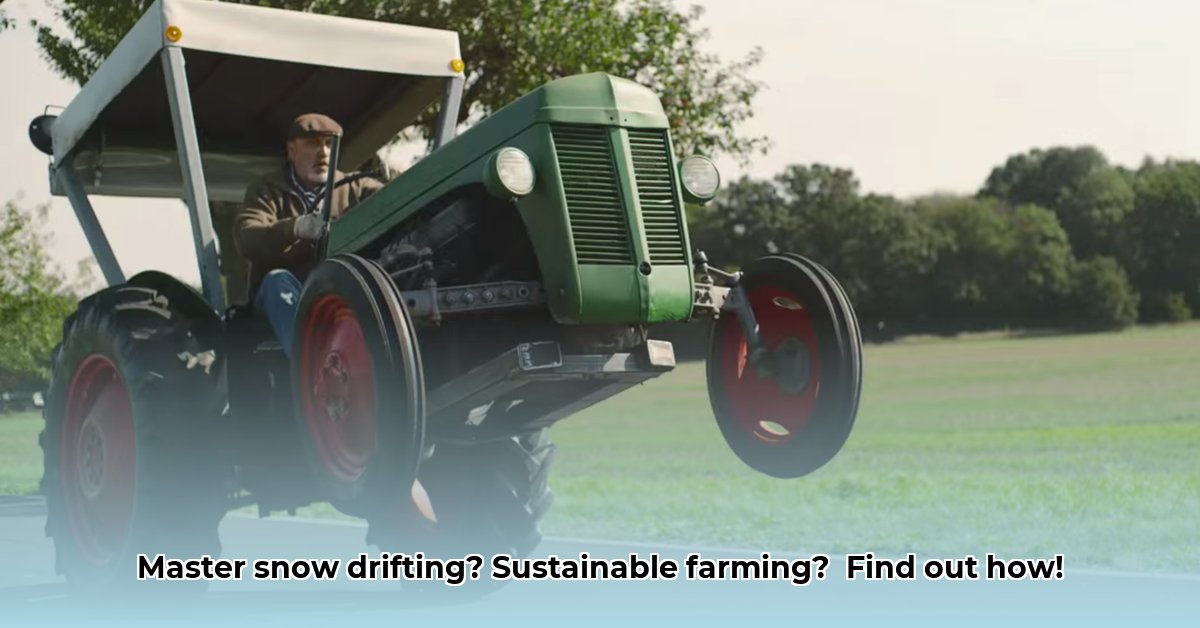
Drifting a Tractor: Conquering Winter's Challenges on Your Farm
Winter's harsh grip on farms can severely impact operations. Heavy snow can render fields inaccessible, delaying planting and harvesting, and ultimately affecting profitability. Effective and sustainable snow removal is crucial for maintaining a productive farm year-round. This guide provides a framework for choosing the right snow management solution for your farm.
For more options, check out this helpful resource on compact tractor snow pushers.
Assessing Your Snow Removal Needs: Know Your Enemy (and Your Budget)
Before investing in equipment, thoroughly assess your farm's winter conditions. How much snow typically falls? Is it light and fluffy, or heavy and wet? What's your budget? Manual snow removal might suffice for small operations, but larger farms may require mechanized solutions. Consider your tractor's capabilities – can it handle the snow load efficiently, or will additional equipment be necessary? Answering these questions is crucial for making informed decisions. Remember, choosing the right approach is key to avoiding costly downtime and protecting your bottom line.
DIY Snow Removal vs. Commercial Snow Cutter: A Cost-Benefit Analysis
Building your own snow-clearing equipment can be cost-effective initially, but it may lack the durability and safety features of a commercial cutter. A homemade solution might be appropriate for minimal snowfall, but in areas with heavy snowfall, a robust commercial snow cutter minimizes risks and ensures efficient snow removal. When considering a DIY approach, prioritize safety and use high-quality materials. A poorly designed cutter, prone to malfunction, can ultimately cost more in repairs, downtime and potential injuries than a commercial option. Your time and safety are valuable assets. What is the cost of an injury?
Choosing a Commercial Snow Cutter: Making an Informed Decision
Selecting a commercial snow cutter requires careful research. Compare models based on factors like cutting width, horsepower requirements, and overall robustness. A heavier-duty model might be necessary for areas with exceptionally heavy snowfall. Regular maintenance is vital to protect your investment and maximize the snow cutter's lifespan.
Building Your Own Snow Cutter: A Cautious Approach
If building a snow cutter, prioritize safety. Use high-quality materials that can withstand the stresses of snow removal. Ensure the cutter is securely attached to your tractor to prevent accidents. Do not compromise on safety. A homemade cutter, while potentially cheaper, should never jeopardize safety. Remember, DIY projects must meet robust safety standards.
The Environmental Impact: Sustainable Snow Removal Practices
Sustainable farming demands consideration of environmental impact. Choose equipment made from recyclable and locally sourced materials to minimize transportation costs and emissions. Proper disposal of old equipment parts is essential to reduce waste.
Safety First: Protecting Yourself and Your Crew
Regardless of your chosen method, prioritize safety. Use appropriate safety gear, including gloves, eye protection, and sturdy boots. Inspect equipment before each use. Be vigilant of potential hazards during snow removal, such as hidden rocks or ice patches. Prioritizing safety is a crucial investment.
Beyond the Cutter: A Holistic Approach to Snow Management
Effective snow management isn't solely about equipment. Strategic planting of trees and shrubs can create natural windbreaks, reducing snow accumulation. Maintain a well-functioning drainage system to prevent ice formation. A well-rounded approach leverages multiple techniques to ensure your farm operates efficiently throughout the winter.
Long-Term Sustainability: Investing in Your Future
Investing in high-quality, well-maintained equipment is an investment in your farm's long-term success. A reliable snow cutter prevents costly delays and downtime. Regular maintenance extends the lifespan of your equipment, minimizing replacements and financial strain. Think of this as safeguarding your investment and the overall financial health of your farm.
Making the Right Choice for Your Farm: A Personalized Approach
The ideal snow removal solution depends on your specific circumstances. Carefully weigh factors such as budget, expected snowfall, and safety requirements. A well-planned snow removal strategy safeguards your equipment, minimizes disruptions, and promotes the long-term sustainability of your farm. Your unique needs are paramount.
How to Choose Sustainable Snow Removal Solutions for Farm Equipment
Efficient snow removal is vital for maintaining farm operations and protecting equipment throughout the winter. This section focuses on choosing sustainable snow removal solutions tailored to your farm.
Understanding Your Needs: A Farm-Specific Assessment
Before selecting equipment, comprehensively assess your farm's needs. Consider:
- Snowfall: Assess the typical snowfall – is it light and fluffy, or heavy and wet? This will greatly influence the power needed by the equipment you choose.
- Area Size: The size of the area demanding snow clearance will heavily influence the type of equipment and the time required. A small driveway needs considerably less effort than a large field.
- Budget: Snow removal solutions vary significantly in price. Budgeting forms a crucial factor in your selection process, directing you to appropriate equipment.
- Tractor Specs: Your tractor’s horsepower and hitch type will limit your options – check your owner's manual.
- Accessibility: Consider tight spaces or obstacles that might impact equipment maneuverability.
Snow Removal Equipment Options: A Detailed Comparison
The primary choices are snow blades and snow blowers. Each has advantages and disadvantages:
| Attachment Type | Pros | Cons | Sustainability Considerations |
|---|---|---|---|
| Front-Mounted Blade | Simple, affordable, effective for light snow; easy maintenance. | Inefficient in deep snow; potential for damage to surfaces. | Lower fuel consumption than blowers; consider the blade material source and recyclability. |
| Front-Mounted Blower | Powerful for heavy snow; throws snow further; better for large areas. | Higher initial cost; more complex maintenance; higher fuel use. | Evaluate fuel efficiency and consider biodegradable hydraulic fluids. |
| Rear-Mounted Blade | Improved visibility; better maneuverability in tight spaces (sometimes). | Requires more skill; slower operation; less common. | Same as front-mounted blade; operator skill reduces fuel use. |
| Rear-Mounted Blower | Similar to front-mounted blower, but with visibility advantages. | Less common; requires significant skill and training. | Same as front-mounted blower; operator skill reduces fuel use. |
Mounting Systems: Compatibility and Efficiency
Your tractor's hitch type significantly impacts equipment choices. Common systems include:
- 3-Point Hitch: A standard, versatile system, but may require more adjustments.
- Quick-Attach: Facilitates rapid changes between implements, offering a significant convenience benefit.
- Direct Hitch: The simplest system, with a direct connection, but suitable for only specific attachments.
The best choice depends on your tractor and the number of attachment changes required.
Choosing the Right Attachment for You: Prioritize Sustainable Efficiency
Consider these key questions:
- Typical Snowfall: Light or heavy?
- Area to Clear: Small lot or vast acreage?
- Budget and Maintenance Capacity: What resources are available?
The answers will guide you toward the most sustainable and effective solution. Prioritize equipment efficiency to minimize fuel consumption and environmental impact.
Sustainable Practices Beyond the Equipment: A Holistic Approach
Sustainability extends beyond equipment selection:
- Proper Storage: Protecting equipment from the elements extends its lifespan.
- Regular Maintenance: Prevents breakdowns and prolongs equipment life.
- Responsible Disposal: Dispose of worn parts responsibly and recycle whenever possible.
Key Takeaways: A Summary of Sustainable Snow Management Practices
- Assess your farm's snowfall patterns and clearing needs accurately.
- Choose between front or rear-mounted snow blades or blowers based on your assessed needs.
- Consider compatible mounting systems (3-point, quick-attach, or direct) and tractor compatibility.
- Prioritize regular maintenance to reduce breakdowns and extend the life of your investment, lowering the environmental impact.
- Sustainable snow removal involves responsible equipment selection, diligent maintenance, and responsible waste disposal practices.